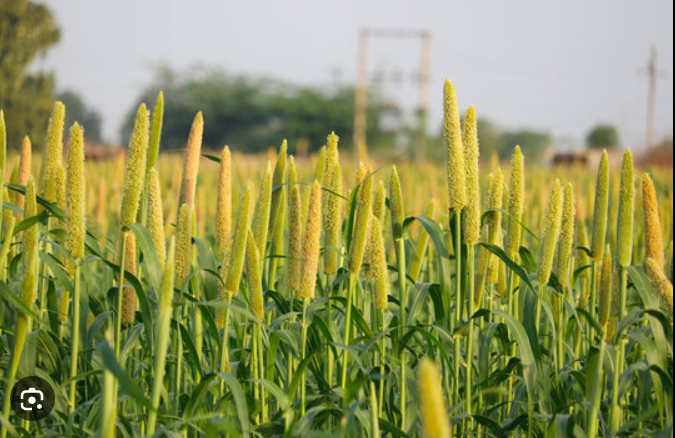
Bajra, also known as Pearl Millet, is an important cereal crop grown in India and other dry regions of the world. It is one of the oldest cultivated grains and is well known for its ability to grow in hot and dry climates. Bajra is a staple food in many rural areas, especially in desert and semi-arid regions.
Cultivation of Bajra
Bajra is mainly grown in arid and semi-arid regions where rainfall is low. In India, major bajra-producing states include Rajasthan, Gujarat, Haryana, Uttar Pradesh, and Maharashtra. It is a kharif crop and requires high temperature and low to moderate rainfall. Bajra grows well in sandy and light soils.
Nutritional Value
Bajra is highly nutritious and provides several health benefits. It is rich in:
-
Carbohydrates
-
Proteins
-
Dietary fiber
-
Iron, calcium, and magnesium
Bajra helps in improving digestion, boosting energy, and maintaining good health. It is also gluten-free, making it suitable for people with gluten sensitivity.
Uses of Bajra
Bajra is used in many ways:
-
It is used to make roti, khichdi, porridge, and bhakri
-
Bajra flour is used in traditional dishes
-
The stalks are used as fodder for animals
-
It is also used in poultry and animal feed
Importance of Bajra
Bajra is an important crop for farmers in dry areas because it requires very little water and can survive in poor soil conditions. It plays a vital role in food security and provides essential nutrients to people living in harsh climates.
Conclusion
Bajra is a valuable millet that supports sustainable agriculture and healthy diets. Its resilience to drought and high nutritional value make it an important grain for the future